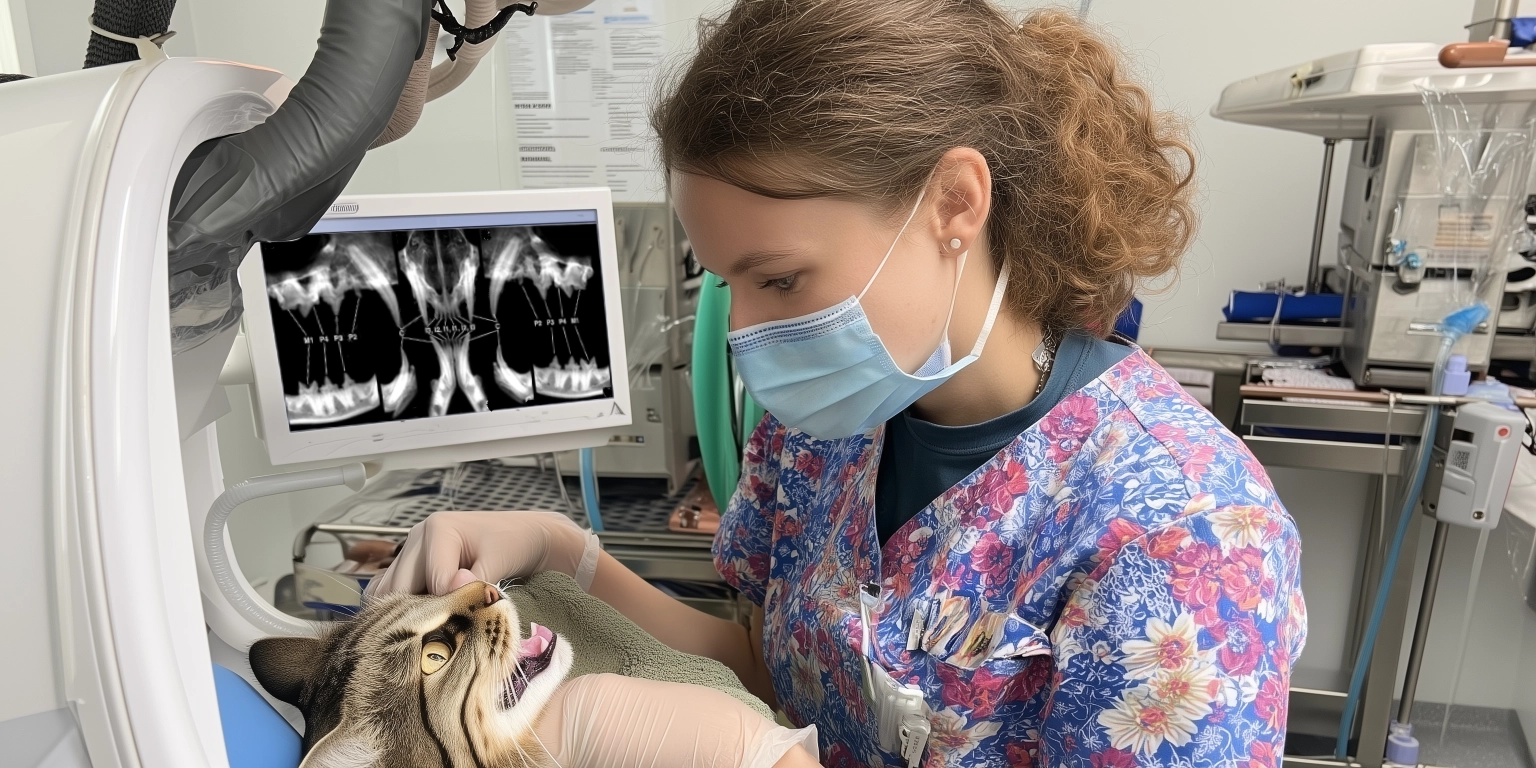
Intraoral dental X-rays use small digital sensors placed inside your pet’s mouth to capture detailed images of tooth roots, jaw bone and surrounding structures. Because most dental health issues occur below the gumline, a dental radiograph is required to find issues that a visual dental exam can’t see, especially in cats and small-breed dogs.
What Are Vet Dental X-rays?
Vet dental X-rays are specialised mouth X-rays taken with a small intra-oral X-ray unit and digital sensors that fit inside your pet’s mouth.
They allow the Horsham Vets team to see:
Tooth roots (not just the visible crown)
The jaw bone around each tooth
Areas between teeth and under fillings or crowns
Impacted or missing teeth that are hidden in the jaw
Because up to 60–70% of the tooth lies below the gum line, dental X-rays are often the only way to detect serious problems.
Why Dental Health Matters for Pets
Poor dental health can cause far more than “doggy breath”:
Chronic pain from infected or fractured teeth
Difficulty eating and weight loss
Spread of bacteria to the heart, liver and kidneys
Behaviour changes such as irritability or quietness
Regular dental check-ups, professional cleans and dental X-rays where indicated help us catch problems before they lead to major pain or systemic illness.
Benefits of Vet Dental X-rays
Early Detection of Hidden Problems
Dental X-rays can reveal:
Root abscesses and infections
Tooth resorption (especially common in cats)
Advanced bone loss from periodontal disease
Fractured roots left behind from old damage
Retained baby teeth or unerupted teeth
Jaw bone changes, cysts or tumours
Finding these issues early means less invasive treatment and better long-term comfort for your pet.
Accurate Diagnosis and Treatment Planning
X-rays help us decide:
Which teeth truly need extraction
Whether a tooth is structurally sound enough to keep
How much bone support remains around each tooth
Where to make incisions and how to close them safely
This precision reduces the risk of:
Leaving diseased root fragments behind
Removing healthy teeth unnecessarily
Your pet needing a second anaesthetic to fix missed problems
How Vet Dental X-rays Are Taken at Horsham Veterinary Hospital
1. Anaesthesia and Dental Exam
For safety and accuracy, vet dental X-rays are taken under general anaesthetic as part of a professional dental procedure.
This allows us to:
Keep your pet completely still for clear images
Protect the airway during cleaning and extractions
Thoroughly examine every tooth and gum surface
Before anaesthesia, we perform a pre-anaesthetic health check and may recommend blood tests to screen organ function.
2. Positioning and Image Capture
Once your pet is anaesthetised:
A digital dental sensor is placed inside the mouth.
A small dental X-ray unit outside the mouth emits a very short X-ray pulse.
The image appears almost instantly on our screen, allowing us to check quality and adjust positioning if needed.
We take images of:
Individual problem teeth
Or, in many cases, full-mouth dental X-rays to assess every tooth
This gives us a complete picture of your pet’s oral health.
Understanding Vet Dental X-ray Findings
Common Conditions Seen on Dental X-rays
Dental X-rays frequently reveal:
Periodontal disease – bone loss around tooth roots
Root fractures – not obvious on visual exam
Tooth resorption – especially in cats, where teeth appear to “dissolve”
Endodontic disease – dead or infected tooth pulp
Retained roots from previous extractions
Jaw fractures and bone changes from trauma or infection
Many of these conditions would be missed without X-rays, even during a careful dental exam.
Healthy vs Problem Teeth
On X-ray, a healthy tooth typically shows:
Smooth, continuous bone around the root
Clear root outlines
Normal root length and shape
No dark or irregular areas around the apex (tip)
Problem teeth may show:
Dark “halos” around the root tip (infection)
Shortened, moth-eaten roots (resorption)
Missing bone between teeth (advanced periodontal disease)
Obvious root fractures or abnormal angles
Your Horsham veterinarian will explain what we see and why certain treatments are recommended.
Dental X-rays vs Other Imaging Techniques
Why X-rays Are the Gold Standard for Teeth
While standard skull X-rays and CT scans can show bones, intra-oral dental X-rays give:
Much higher resolution of individual teeth
Better detail of tooth roots and surrounding bone
The ability to focus on single teeth or small groups
Ultrasound and standard external X-rays are not detailed enough for most dental decisions, which is why dedicated dental radiography is so important.
Safety of Vet Dental X-rays
Radiation Exposure
Dental X-rays use very low doses of radiation, and:
Exposures are extremely brief
Only a small area (the mouth) is targeted
Modern digital systems require less radiation than older film systems
The risk from occasional dental X-rays is very small, especially compared with the benefit of detecting painful disease.
Sedation and Comfort
Because your pet is under general anaesthetic for dental work:
They don’t feel or remember the procedure
We can position them safely without stress
We can complete cleaning, X-rays and any extractions in one procedure
Our team monitors your pet’s anaesthetic closely the entire time to keep them safe and comfortable.
Cost of Vet Dental X-ray Services
What Affects the Price?
The cost of dental X-rays can vary depending on:
Whether we take targeted X-rays of a few teeth or full-mouth radiographs
How extensive your pet’s dental disease is
Additional procedures needed (e.g. extractions, suturing, medications)
Although they add to the cost of a dental procedure, X-rays often save money in the long run by preventing missed disease, failed treatments and repeat anaesthetics.
Pet Insurance and Dental Cover
Some pet insurance policies:
Cover dental disease and X-rays if you have dental cover and meet their conditions
May help with costs linked to accidental tooth fractures or infections
It’s worth checking your policy or speaking with your provider to see what’s included.
If your pet has bad breath, visible tartar, broken teeth or is due for a dental check, talk to the team in Horsham about whether dental X-rays should be part of their next visit.